
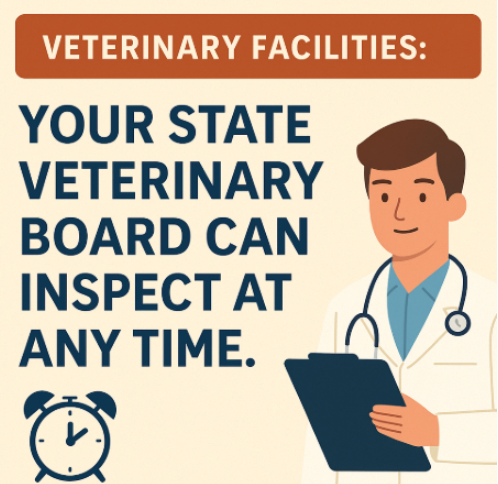
Most veterinary teams understand that their State Veterinary Board plays a crucial role in protecting public health, ensuring ethical practice, and maintaining high standards of animal care. But one detail that often slips under the radar is when an inspection can happen. The short answer? Any time. And that’s not an exaggeration.
Recently, I worked with a facility that received a surprise inspection, on a Saturday, on New Year’s Eve. While many practices assume inspections only occur during traditional business hours, that’s not always the case. In many states, inspectors are licensed veterinary professionals who take on this responsibility as a secondary role. That means their availability may include evenings, weekends, or non-traditional hours. If that’s when they’re able to conduct inspections, those are the times when doors may be knocked on and compliance evaluated.
Why This Matters
Unannounced inspections aren’t meant to intimidate, they exist to ensure that veterinary facilities are consistently upholding standards that keep both teams and patients safe. Cleanliness, proper documentation, correct drug handling, equipment maintenance, and workplace safety aren’t “once-a-month projects.” They are daily expectations, and surprise inspections are one way boards help reinforce that.
Inspectors Are Our Allies
It’s important to remember that these inspectors are not outsiders looking to “catch someone doing something wrong.” In most states, they’re veterinarians, technicians, or seasoned professionals who understand the realities of clinical life. They’ve stood where your team stands now.
These individuals take on inspection duties because they care deeply about:
- Patient safety
- Staff safety
- Legal, ethical practice
- Public trust in the veterinary profession
They commit their personal time, often outside a typical workweek, to help facilities stay compliant and identify areas that could put teams or animals at risk. Their work helps ensure that every veterinary patient receives care in a safe, well-regulated environment.
What Facilities Should Remember
- Always be inspection-ready.
- Cleanliness, documentation, and controlled drug compliance shouldn’t depend on what day of the week it is.
- Expect inspections outside of 8–5.
- Weekends or later in the day are very possible.
- Use inspections as learning opportunities.
- They’re not just checks, they’re chances to improve.
- Show appreciation.
- These inspectors are helping elevate our profession. A little kindness goes a long way.
- These inspectors are helping elevate our profession. A little kindness goes a long way.
State Veterinary Board inspectors aren’t just regulators, they’re partners in creating safer, stronger, more accountable veterinary practices. Their work benefits our teams, our clients, and most importantly, the animals entrusted to us.
So, whether it’s a Tuesday morning or a Saturday afternoon, every veterinary facility should be prepared, welcoming, and appreciative when an inspector walks through the door. It’s a reminder that high standards are worth protecting, every day of the week.