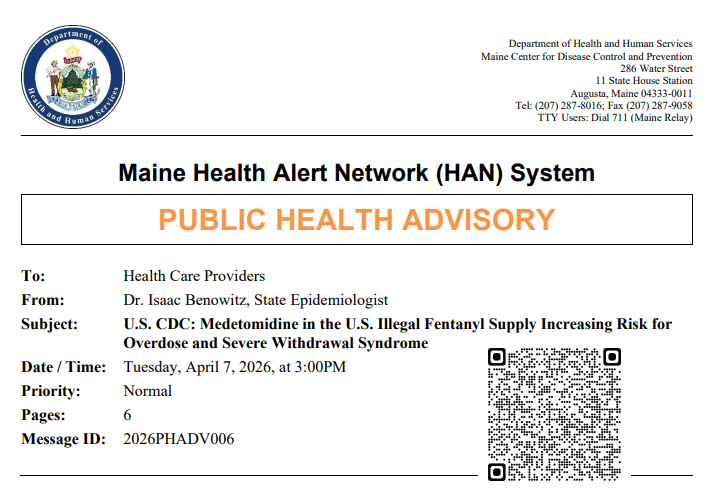
The evolving landscape of illicit drug use continues to present new and complex public health challenges. A recent advisory from the Centers for Disease Control and Prevention (CDC) highlights a concerning trend: the increasing presence of medetomidine, a veterinary sedative, in the illegal drug supply.
While not approved for human use, medetomidine is widely used in veterinary medicine, particularly for sedation and analgesia in dogs. Its emergence outside clinical settings underscores a critical need for awareness across both human healthcare and veterinary professionals.
Below is information being distributed to facilities during in person DEA visits. Scan the QR code to review the document in its entirety.
What Is Medetomidine, and Why Is It Concerning?
Medetomidine is an alpha-2 adrenergic agonist known for its potent sedative effects. In veterinary settings, it is carefully administered under controlled conditions. However, in illicit drug markets, it is increasingly being synthetically produced and mixed, most often with fentanyl.
This combination significantly increases risk because:
- It causes profound sedation, slow heart rate (bradycardia), and low blood pressure
- It does not respond to naloxone, the standard opioid overdose reversal drug
- It can lead to severe and life-threatening withdrawal symptoms
The CDC reports a sharp rise in detection, with cases increasing dramatically across multiple U.S. regions, indicating rapid spread and adoption in illicit drug manufacturing.
A New Layer of Complexity in Overdose Response
One of the most dangerous aspects of medetomidine is how it complicates overdose treatment:
- Naloxone may restore breathing (if opioids are involved), but sedation from medetomidine persists
- Patients may require extended monitoring, respiratory support, or ICU care
- Withdrawal symptoms can be severe, including:
In some reported clusters, patients required hospitalization and intensive interventions, with at least one fatality documented.
Why This Matters to the Veterinary Community
Although the misuse is occurring outside legitimate veterinary channels, medetomidine’s origin in veterinary medicine places the profession at a critical intersection of awareness and prevention.
Food for thought:
1. Reputational and Regulatory Risk
Veterinary drugs appearing in illicit markets may lead to:
- Increased scrutiny of veterinary prescribing and inventory practices
- Regulatory changes impacting access and administration protocols
2. Diversion Concerns
While current evidence suggests illicit synthesis rather than diversion of veterinary-grade products, vigilance remains essential:
- Secure storage and inventory tracking should be reinforced
- Staff should be trained to recognize suspicious activity
3. Clinical Knowledge Gap
Veterinary professionals possess unique expertise in:
- Pharmacology of alpha-2 agonists
- Sedation and reversal pathways
This knowledge can be valuable in broader interdisciplinary conversations around emerging drug threats.
SageComply Perspective – Increasing Awareness Is Essential
At SageComply, we believe this emerging issue presents a clear call to action for the veterinary field.
Our Recommendation: Proactive Awareness and Education
Veterinary organizations, clinics, and compliance leaders should:
- Educate staff on the risks and public health implications of medetomidine misuse
- Review and reinforce controlled substance protocols, including storage, logging, and auditing
- Engage in cross-sector collaboration with public health and human healthcare stakeholders
- Monitor regulatory updates as agencies respond to this evolving threat
Awareness is not about assigning responsibility, it’s about positioning the veterinary field as an informed and proactive partner in public safety.
Action To Be Taken
The appearance of medetomidine in the illicit drug supply is a reminder that boundaries between medical, veterinary, and public health domains are increasingly interconnected.
By staying informed and strengthening compliance practices, veterinary professionals can play a meaningful role in addressing emerging risks, while continuing to provide safe, effective care in their primary clinical mission.